Parathyroid Surgery in Dallas
Minimally invasive parathyroidectomy for hyperparathyroidism — the only cure for the primary form of the disease, and one of the operations Dr. Dresel performs most often.

Named every year since 2008
Dr. Dresel has been selected by her peers for D Magazine’s Best Doctors list every year since 2008, with the exception of 2017 — a selection made by physicians across Dallas. See her listing →
One of the highest-volume parathyroid surgeons in Dallas
Dr. Alexandra Dresel performs over 100 parathyroidectomies a year for hyperparathyroidism, using a minimally invasive approach. She is a board certified general surgeon and a Fellow of the American College of Surgeons, and has earned the Focused Practice Designation in Adult Complex Thyroid and Parathyroid Surgery from the American Board of Surgery — held by only a handful of surgeons in North Texas.
For parathyroid disease in particular, surgeon volume matters: locating an abnormal gland and confirming the cure during the operation depends heavily on experience. Dr. Dresel serves as Chair of the Department of Surgery at Presbyterian Hospital of Dallas and performs the majority of her operations at the Women’s Specialty Surgery Center. She is fluent in Spanish.
What is hyperparathyroidism?
Hyperparathyroidism occurs when one or more of your parathyroid glands become overactive and produce too much parathyroid hormone (PTH).
The parathyroid glands are four tiny glands, usually the size of a grain of rice, located behind the thyroid gland in your neck. They help control the amount of calcium in your blood and bones.
When they produce too much PTH, calcium levels in the blood rise (hypercalcemia), which can affect your bones, kidneys, and other organs.
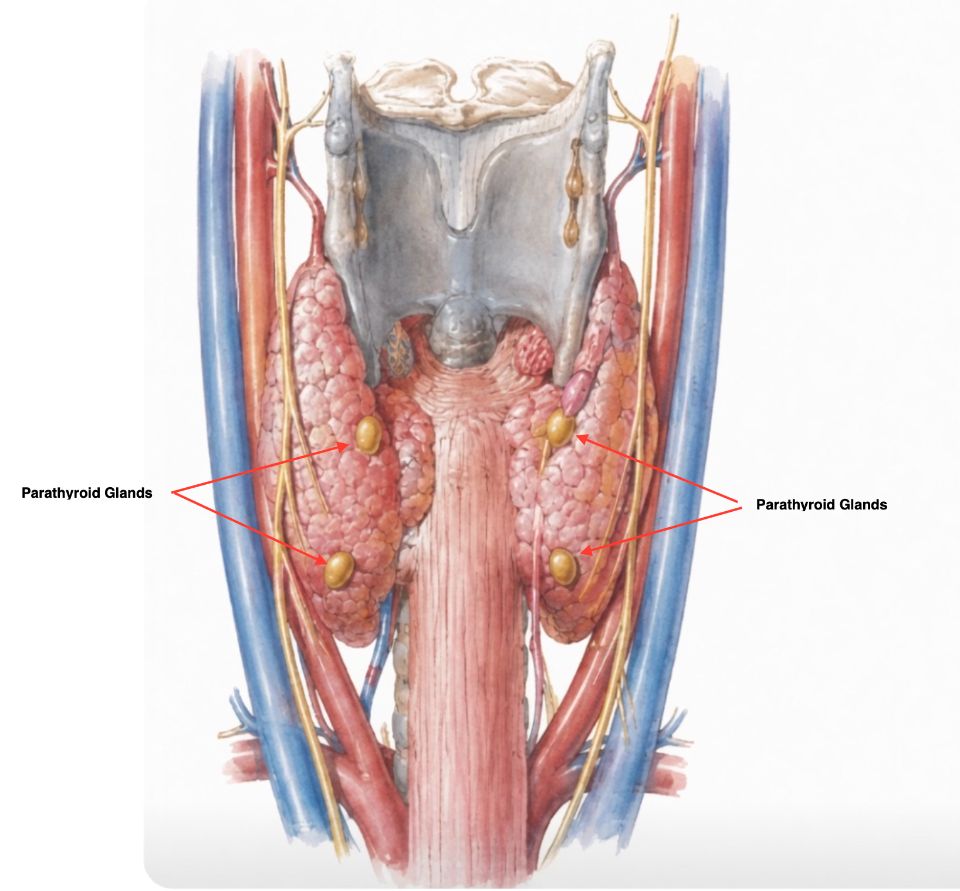
A posterior view of the neck showing the four parathyroid glands behind the thyroid gland.
The main types
Common symptoms
Osteoporosis (weak bones)
Joint aches
Brain fog or memory issues
Depression or mood changes
Kidney stones
Frequent urination or thirst
Many patients have mild or no symptoms, but even “asymptomatic” cases can cause long-term damage to bones and kidneys.
How it is diagnosed
Parathyroid surgery (parathyroidectomy)
Surgery is the only cure for primary hyperparathyroidism.
→ Small incision (1–2 inches) in the neck
→ Surgeon removes the overactive gland(s)
→ Often uses intraoperative PTH monitoring for immediate confirmation of success
→ Minimally invasive techniques common, achieving a favorable cosmetic result
Improves bone density
Reduces risk of kidney stones
Many patients feel more energy and clearer thinking
• Temporary low calcium — managed with supplements
• Hoarse voice (usually temporary)
• Bleeding or infection
• Permanent low calcium (very rare)
Recovery timeline
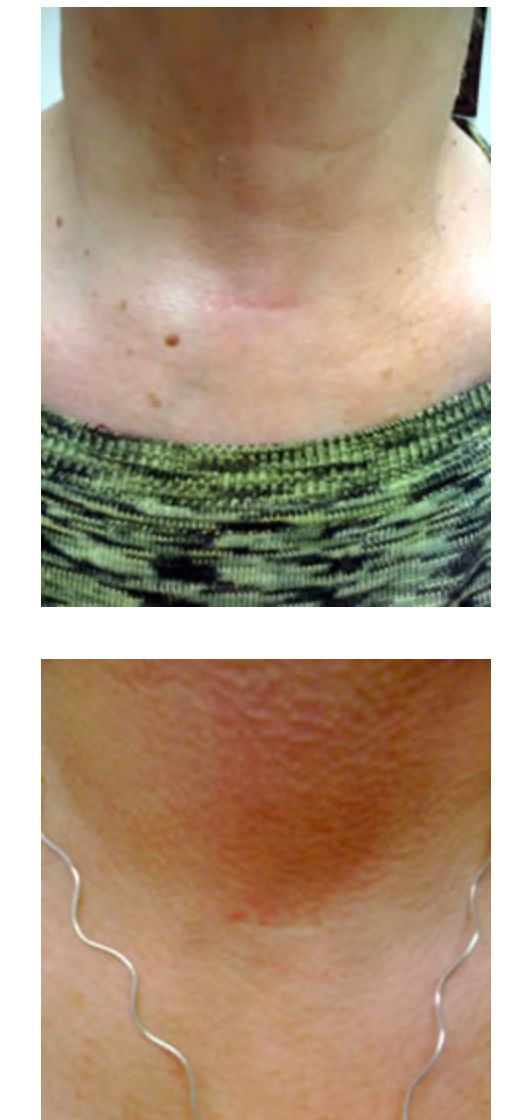
Parathyroidectomy “after” photos
Real healed incisions from Dr. Dresel’s patients, showing the small, cosmetically favorable scar typical of her minimally invasive technique.
Common questions about parathyroid surgery
Is surgery the only cure for hyperparathyroidism?
Parathyroid surgery is the only cure for primary hyperparathyroidism. It normalizes calcium levels in over 95% of cases.
How large is the incision?
The incision is small, typically 1 to 2 inches in the neck. Minimally invasive techniques are used to achieve a favorable cosmetic result. The “after” photos above show a healed incision from one of Dr. Dresel’s patients.
Will I go home the same day?
Most patients go home the same day. Mild neck soreness and a sore throat are common in the first day.
How long is recovery?
Most patients return to light activities within the first week, avoiding heavy lifting, and reach full recovery in two to three weeks with minimal scarring. Calcium and Vitamin D supplements are often prescribed during that time.
What are the risks of parathyroid surgery?
Serious complications are rare when surgery is performed by experienced surgeons. Possible risks include temporary low calcium managed with supplements, a hoarse voice that is usually temporary, bleeding or infection, and permanent low calcium, which is very rare.
How is hyperparathyroidism diagnosed?
Diagnosis involves blood tests showing high calcium together with high PTH levels, a 24-hour urine calcium test, and imaging such as ultrasound, a sestamibi scan or 4D-CT to locate the abnormal glands.
What happens if I leave it untreated?
Many patients have mild or no symptoms, but even “asymptomatic” cases can cause long-term damage to bones and kidneys.
Every patient is different. This page is for educational purposes. Dr. Dresel will provide personalized advice based on your specific situation.
Medically reviewed by Alexandra Dresel, MD, FACS, board certified general surgeon. Last reviewed September 8, 2026.